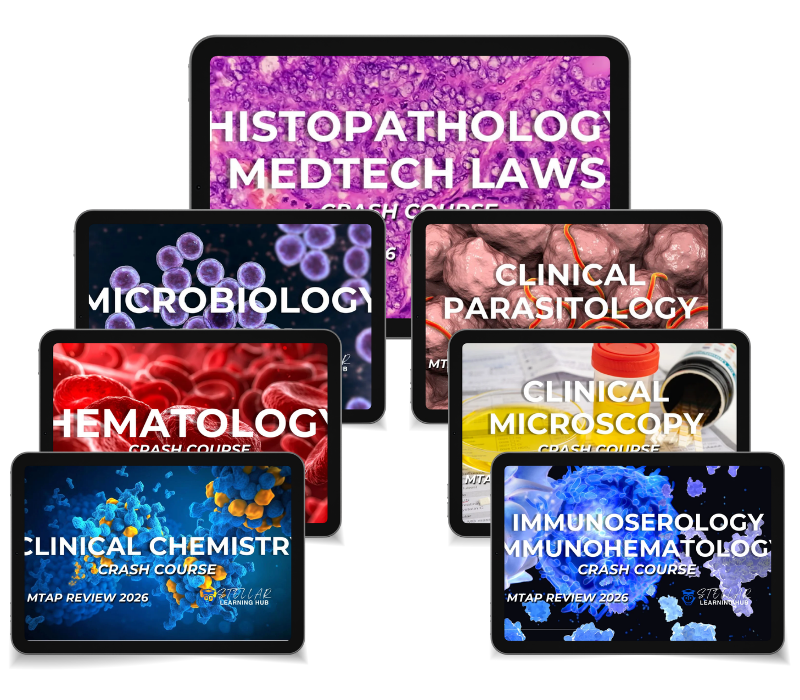

Preparing for the MedTech board exam can feel overwhelming. A clear, simple MedTech study plan keeps you on track, lowers stress, and boosts your scores. In this guide, you’ll get a step-by-step plan you can follow right away—built for MTLE, MTAP, and ASCPi candidates. The language is plain, the tips are practical, and the schedule is realistic even if you’re juggling work or school.
What Makes a MedTech Study Plan “Effective”?
An effective plan is:
- Focused: You know what to study each day.
- Balanced: You cover all core areas without cramming.
- Active: You test yourself, not just reread notes.
- Data-driven: You adjust using scores from quizzes and mock exams.
- Sustainable: You have rest days and short, regular sessions.
Core subjects to map into your plan
- Clinical Chemistry
- Hematology & Coagulation
- Microbiology (Bacteriology, Mycology, Virology)
- Parasitology
- Immunohematology (Blood Banking)
- Immunology & Serology
- Urinalysis & Body Fluids
- Laboratory Management, QC, Instrumentation & Safety
Step 1: Set Your Timeline and Weekly Hours
Be honest about your time and energy. Most students do well with 8–12 weeks of structured prep.
- If you can do 2–3 hours/day, 5–6 days/week, that’s enough for steady progress.
- Add a weekly mock quiz (30–60 minutes) and a longer mock exam every 2–3 weeks.
Tip: Short, regular sessions beat long, rare marathons. Aim for 25–40-minute blocks with 5–10 minutes of rest.
Step 2: Diagnose Your Starting Point (Quick Baseline)
Before you dive in, take a baseline quiz across all subjects (30–60 minutes). Note your weakest areas. Rank them:
- Red (weak)
- Yellow (okay)
- Green (strong)
You’ll study Red more often, Yellow regularly, and Green for maintenance.
Step 3: Use the “3A” Method Daily
Active Recall → Application → Adjustment
- Active Recall (10–15 min): Flashcards or short-answer drills before reading.
- Application (25–40 min): Practice questions or case vignettes. Check answers right away.
- Adjustment (5–10 min): Note errors, add to a “Fix List,” and create 1–2 new flashcards.
This loop turns study time into results.
Step 4: Structure Your Week (Sample)
- Mon–Thu: Two focused study blocks on specific topics + quick quiz
- Fri: Mixed questions from all subjects
- Sat: Mock exam or long quiz + targeted review
- Sun: Light review or rest
Spaced repetition tip: Revisit new flashcards on Day 1, Day 3, Day 7, then weekly.
8-Week MedTech Study Plan (Sample)
Use this as a template. Adjust based on your baseline and schedule.
Weeks 1–2: Foundation & High-Yield Basics
- Chemistry: Carbohydrates, lipids, proteins; enzymes; electrolytes; acid–base
- Hematology: RBC indices, anemia classification, WBC overview, coag basics
- Micro: Gram-positive vs Gram-negative review; culture basics; staining
- Urinalysis: Physical/chemical exam; microscopy basics
- Daily: 1–2 blocks (25–40 min), 20–30 practice Qs
- End of Week: 60–90 min mixed quiz, review errors
Weeks 3–4: Systems & Patterns
- Chemistry: Liver, kidney, cardiac markers; endocrine; TDM & toxicology
- Hematology: Hemoglobinopathies, leukemias/lymphomas, hemostasis panels
- Micro/Para: Common pathogens, identification flow; parasites life cycles & ova
- Immunology/Serology: Antigen–antibody basics; common tests; interpretation
- Skills: QC, calibration, Westgard rules (introduce now)
- End of Week 4: Mock Exam 1 (100–150 Qs)
Weeks 5–6: Deepen & Apply
- Immunohematology (Blood Bank): ABO/Rh, antibody screening/ID, crossmatching, transfusion reactions
- Micro: Mycobacteria, anaerobes, special media; viruses; antifungal basics
- Chemistry: Interferences, pre-analytical errors, method principles (spectro, ISE, immunoassay)
- Urinalysis/Body Fluids: CSF, serous fluids, synovial analysis
- Lab Management & Safety: Inventory, biosafety levels, CLIA/ISO vibes (big picture), stats (CV, SD)
- End of Week 6: Mock Exam 2 (150–200 Qs)
Weeks 7–8: Final Prep & Polishing
- Target Red Areas: Your poorest topics from mocks
- Case-based practice: Heme differentials, transfusion scenarios, QC troubleshooting
- Rapid Reviews: High-yield tables, organism IDs, normal ranges (know trends, not just numbers)
- Week 8: Mock Exam 3 (board-style length), then 2–3 days of light review
- Final 48 hours: Sleep, light flashcards, confidence pass—no cramming
Daily Study Block Template (Simple)
- Warm-up (5 min): Quick scan of yesterday’s “Fix List.”
- Active Recall (10–15 min): Flashcards or brain dump (e.g., “types of hemolysis,” “ABO discrepancies”).
- Learn/Review (25–40 min): Notes, videos, or summaries.
- Practice Qs (20–30 min): Immediate feedback.
- Wrap-up (5–10 min): Update Fix List, mark weak spots, schedule revisit.
Keep a “Fix List”—one running page of mistakes you never want to repeat. Review it daily.
How to Balance Topics (Red–Yellow–Green Rule)
- Red topics: 3x per week
- Yellow topics: 2x per week
- Green topics: 1x per week (short maintenance set)
Example: If Blood Bank is Red, schedule it Mon/Wed/Sat with at least one case-based session.
High-Yield Focus by Subject (What to Master)
Clinical Chemistry
- Enzyme patterns (MI, pancreatitis, liver disease)
- Electrolyte disorders (Na, K, Ca, Mg) and ABG interpretation
- Endocrine basics (thyroid, diabetes markers)
- TDM and toxicology essentials
- Method principles and common interferences
Hematology
- RBC morphologies and anemia workups
- WBC differentials and leukemia classifications
- Hemostasis pathways, mixing studies basics
- Quality control charts and troubleshooting
Microbiology & Parasitology
- Gram stains, culture media, test algorithms
- ID clues (odors, pigments, hemolysis, rapid tests)
- Mycobacteria and anaerobe essentials
- Parasite ova/cyst ID patterns and life cycles
- Infection control and biosafety basics
Immunology/Serology
- Antigen–antibody concepts, avidity/affinity
- Test formats (agglutination, ELISA, lateral flow)
- Clinical interpretations (e.g., hepatitis panels)
Immunohematology (Blood Bank)
- ABO/Rh, weak D, forward vs reverse typing issues
- Antibody screen, panel interpretation flow
- Crossmatch logic, transfusion reaction steps
- Donor screening basics
Urinalysis & Body Fluids
- Correlation of strip results with disease patterns
- Microscopic elements—casts, crystals, cells
- CSF and other fluids: normal vs pathologic
Lab Management, QC & Safety
- Westgard rules & actions
- Preventing pre-analytical errors
- Equipment logs, calibration, documentation
Study Tools That Work
- Pomodoro timer (25–40 min focus blocks)
- Flashcards (Anki or paper—spaced repetition)
- Question banks (mix easy/medium/hard items)
- Error log (“Fix List”) with date and short note on what went wrong
- Checklists for ID steps (e.g., micro flowcharts, antibody ID flow)
Simple Weekly Checklist (Print This)
- Took 1 mixed quiz (≥30 Qs)
- Reviewed all wrong answers the same day
- Completed 6–10 study blocks
- Revisited Red topics at least 3 times
- Updated Fix List daily
- Did one light day or full rest day
- Practiced 1 set of case questions
Test-Day Strategy (MTLE/MTAP/ASCPi)
- Sleep 7–8 hours the night before.
- Eat light, hydrate, and bring allowed snacks/water if permitted.
- First pass: Answer what you know, mark tricky ones.
- Second pass: Re-read stems; eliminate 2 options; choose the best remaining.
- Time checks: Aim for steady pace; don’t get stuck on one item.
- Trust your training: Go with the answer that matches your study patterns and QC logic.
Common Mistakes to Avoid
- Only reading, no questions: You need practice items daily.
- Ignoring weak areas: Red stays red if you avoid it.
- No review of errors: The Fix List is where you gain points.
- Overcramming ranges: Know trends and clinical meaning, not just numbers.
- Skipping rest days: Burnout reduces recall.
Quick FAQ (For Peace of Mind)
How many hours should I study each day?
2–3 hours on weekdays is fine if you’re consistent. More is okay if you keep quality high.
Are mock exams necessary?
Yes. Do one around Week 4, Week 6, and Week 8. They guide what to fix.
What if I have only 4–6 weeks?
Shorten the plan: focus on Red topics, do daily mixed questions, and take at least two full mocks.
Should I memorize all reference ranges?
Know typical ranges and pattern recognition. Focus on clinical implications and method issues.
Your Next Steps (Start Today)
- Pick an 8–12 week window and block 2–3 hours/day.
- Take a baseline quiz and mark Red/Yellow/Green.
- Set up your Fix List and flashcards.
- Follow the 3A method every study day.
- Schedule Mock Exams in Weeks 4, 6, and 8.
If you’re using our MedTech review LMS, enroll in the guided study path for your exam (MTLE, MTAP, or ASCPi), start with the baseline diagnostic, and follow the weekly checklists inside the course. You’ll see your Red/Yellow/Green topics update automatically as you take quizzes—so your plan keeps getting smarter.